One Riverway Drive, Ste. 1700, Houston, Texas 77056 713-300-3744info@airedevelopmentgroup.com
Home/Land Development Analysis
Land Development Analysis

What is this land actually worth built?

Our Land Development Analysis answers that question with evidence, not opinion: physical site constraints, entitlement reality, market absorption, a full pro forma, and a documented highest-and-best-use recommendation a lender will actually read. Delivered in about thirty days, anywhere in the country.

Return on investment.Return to community.

Land only pays twice if you plan for it twice. Every analysis we deliver is judged on whether the numbers work and whether the thing that gets built is worth having on that block in twenty years. We have never found those two goals to be in conflict.

How we work

Four things you should know before you hire us.

01

We'll tell you no.

Some of our most valuable work has been showing an owner that the project they wanted doesn't pencil, before they spent the money finding out the hard way.

02

Housing is the point.

Workforce and affordable housing is where our team's credentials live: HUD-certified HOME program specialist, NDC economic development finance professional, LEED Green Associate.

03

Same rigor, any size.

Three duplex lots in rural Georgia get the same analysis a two-hundred-acre master plan gets. We bring institutional underwriting to deals institutions won't look at.

04

Show your work.

The recommendation on page one traces to the evidence behind it. A lender, a partner, or a city can audit our reasoning line by line, and they do.

The deliverable

Six sections. One answer.

Every LDA follows the same structure, so the recommendation at the front is traceable to the evidence behind it.

I

Executive Summary

The highest-and-best-use recommendation, the alternatives we tested, and why they lost.

II

Physical Analysis

Aerials, survey, site plan, traffic counts, ASCE hazard and FEMA flood review, utilities, detention, access.

III

Financial Analysis

Full development budget, pro forma, underwriting specifications, and lender outreach.

IV

Market Analysis

Demographics at one, three, and five miles, absorption, vacancy, rent and sale comparables, forward supply.

V

Legal Considerations

Zoning and subdivision code, ETJ status, platting path, deed restrictions, entity structure.

VI

Qualifications

Who did the work, and the credentials standing behind the recommendation.

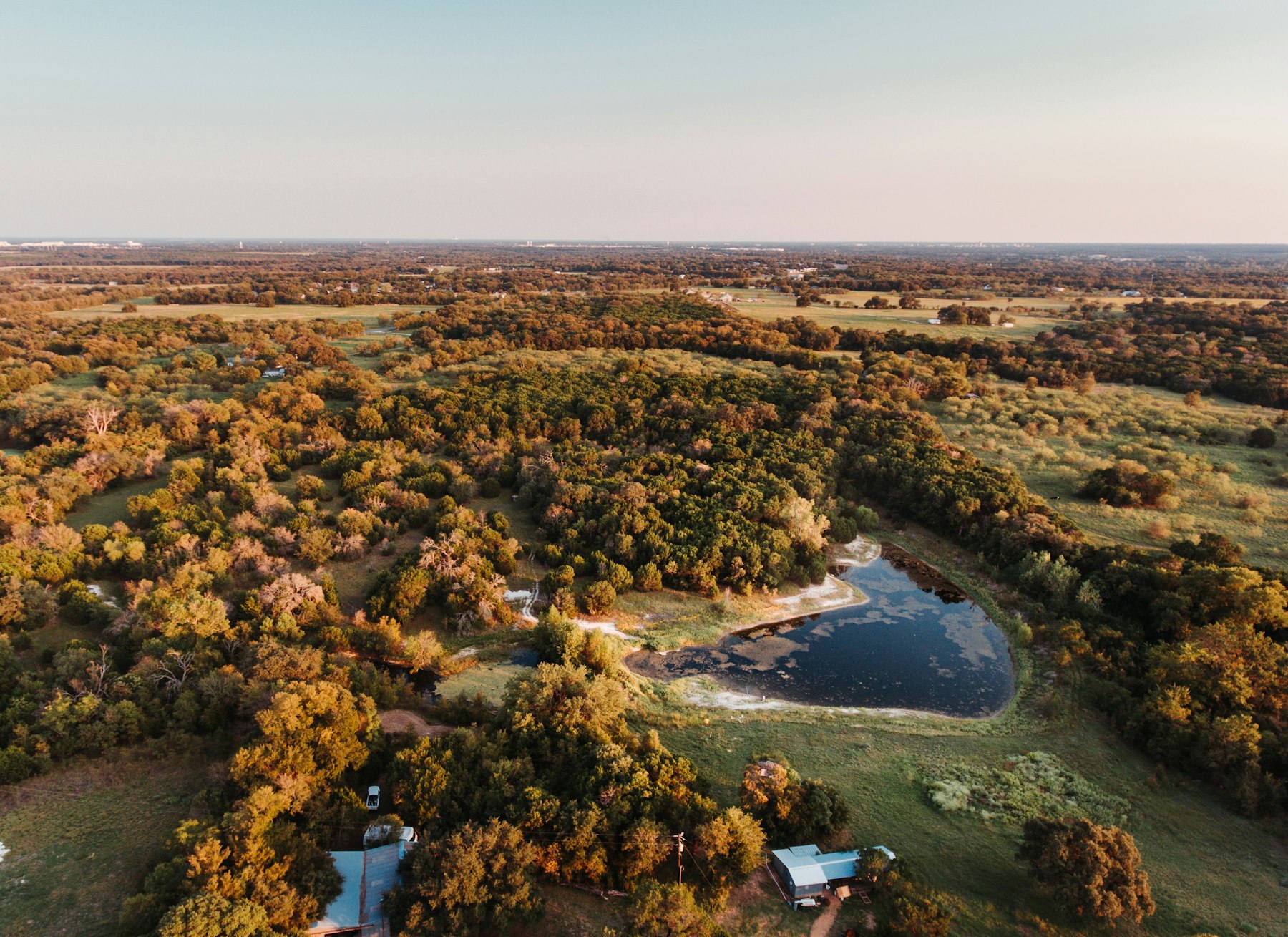
Aerial of a large wooded tract with a lake
Featured engagement · Mixed-use master plan

Eagle Lake Ranch, Conroe.

Nearly two hundred unrestricted acres with dual road frontage in a county with no zoning. Vacancy was running double its five-year average, which ruled out leading with commercial. We phased infrastructure to absorption, priced the tract against every comparable in its market, recommended a separate single-asset entity for each phase, and carried the work into the capital markets, where it drew a letter of intent on a three-year term.

Land
197.85 ac
Buildout
6–10 yrs
Flood zone
X, Outside
Status
LOI Secured
Case studies

Every site tells you what it wants to be.

Four recent analyses, with the site plans and the numbers. Client identities withheld; the figures are from the delivered reports.

Case study 01 · Residential subdivision

54 acres of pasture. A $5.5M profit plan.

Tyler, Texas · Smith County · 54.795 acres · Build-and-sell
$520KWhat the land cost
100Homes it can hold
$5.5MProjected profit
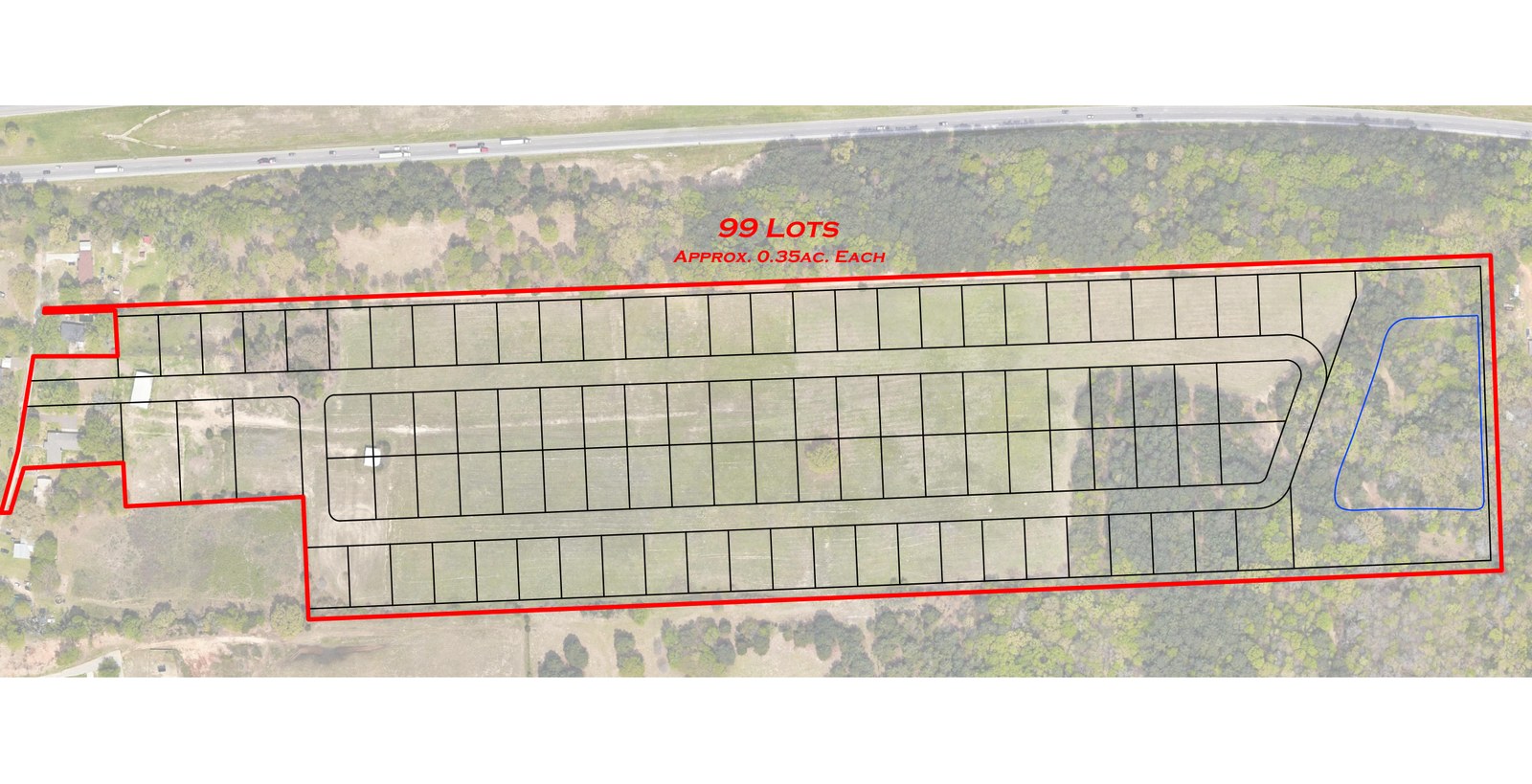
Option A: 99 lots at about a third of an acre, four phases
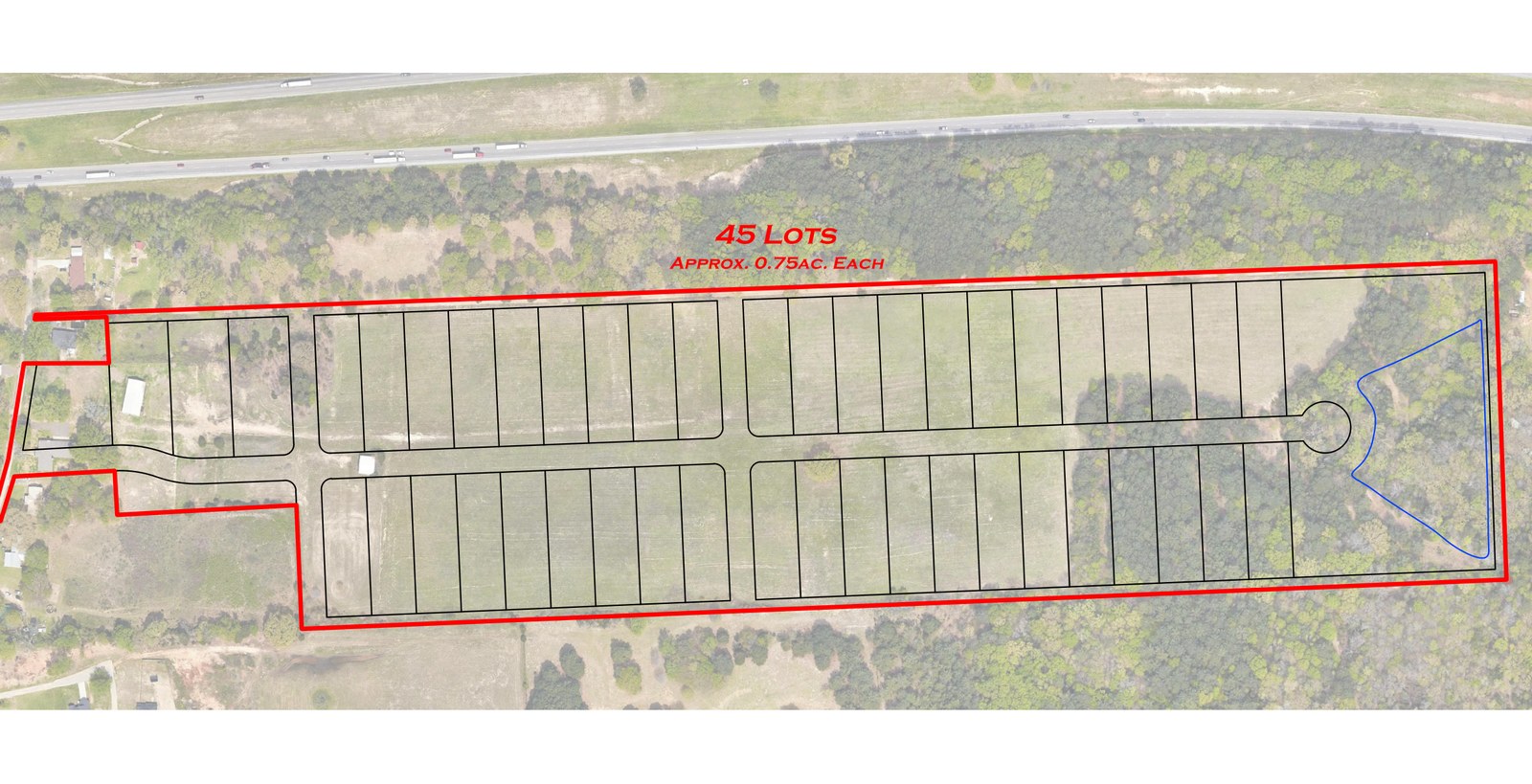
Option B: 45 estate lots with a 3.5-acre lake, two phases
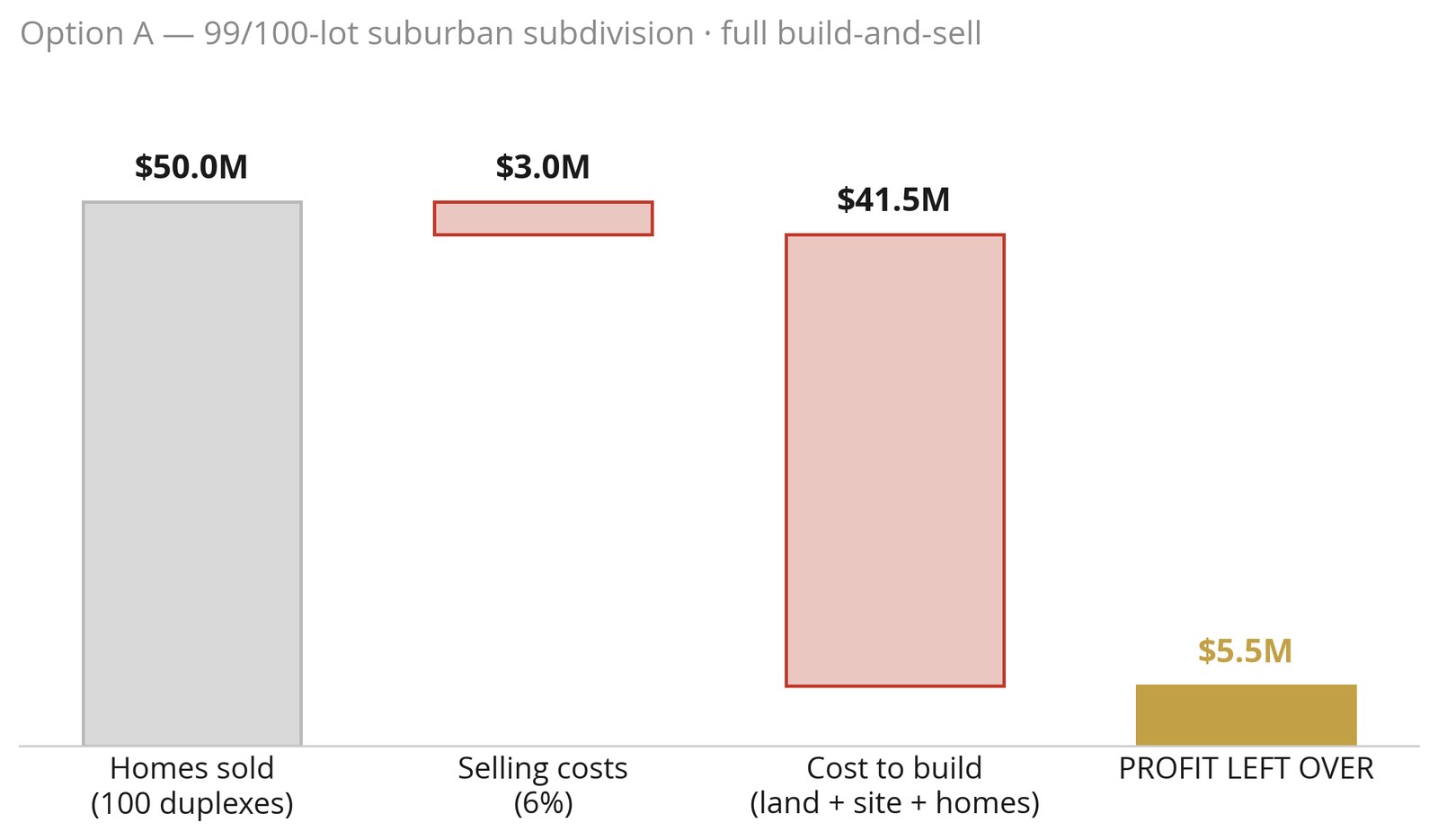
Option A: $50M of home sales, $41.5M to build, $5.5M left over

The situation

  • A family LLC had owned 54.8 acres six miles west of Tyler for four years without earning a dollar from it. Bought out of a court receivership at about $9,540 an acre, with a $496,000 note still on it.
  • Taxed as pasture, used as nothing: wildlife-management and ag use, one 1930s house, one horse barn. Assessed at $769,319.
  • Unincorporated Smith County, no zoning map, so nobody could tell them how many homes were allowed. Two brokers gave two different numbers, and neither could say what the land was worth after development.

What we did, in 30 days

  • MarketPulled comparable sales and found new-construction duplexes in the Tyler area trading at $195 to $205 per square foot. That set the ceiling on what a finished home sells for.
  • SiteConfirmed FEMA Flood Zone X, mapped the usable ground (84% of the tract), and priced the missing pieces: roads, water, septic, drainage, power.
  • FinancialBuilt two complete pro formas, every line of cost and every dollar of revenue, so the owner could compare a big plan against a fast plan side by side.

The numbers

  • Option A, 99 lots: 100 finished duplexes at $500,000 each is $50.0M in sales, $47.0M after selling costs, $41.5M to build. Profit $5,502,750, a 13.3% margin and 44.1% return on cash invested, over 48 to 60 months.
  • Option B, 45 estate lots: $23.4M to build, $2.5M profit, in 24 to 36 months.
  • Assumed: homes built at $120 per square foot, 7.5% contingency, 70% construction loan at 8.5 to 10%, $1.8M of carry.
What could break it. If finished homes fetch $450,000 instead of $500,000, Option A profit drops from $5.5M to roughly $0.8M. That is the single number this deal lives or dies on, which is exactly why we model it before anyone breaks ground.

They came to us with a tax bill and a pasture. They left with two engineered subdivisions, two complete budgets, and a number they could take to a lender.

Tre Marshall · Co-Founder, AIRE Development Group
$769KAssessed value today
$47.0MNet revenue built out
$5.5MProfit the owner didn't know was there

Source: Land Development Analysis issued March 2026; engineer's subdivision sketches April 2026. Client identity withheld.
Case study 02 · Townhouse community

The apartments the city was never going to approve.

Pearland, Texas · Brazoria County · 6.9 acres · From an unbuildable plan to 42 saleable homes
6Apartment buildings drawn
0Chance the city approves them
42Homes we found instead
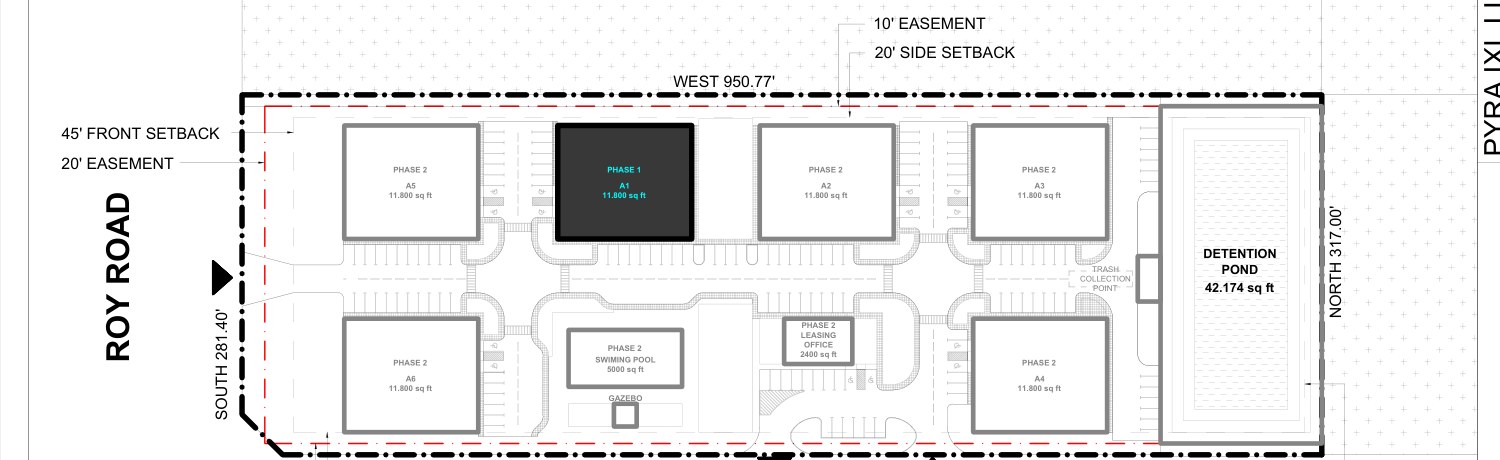
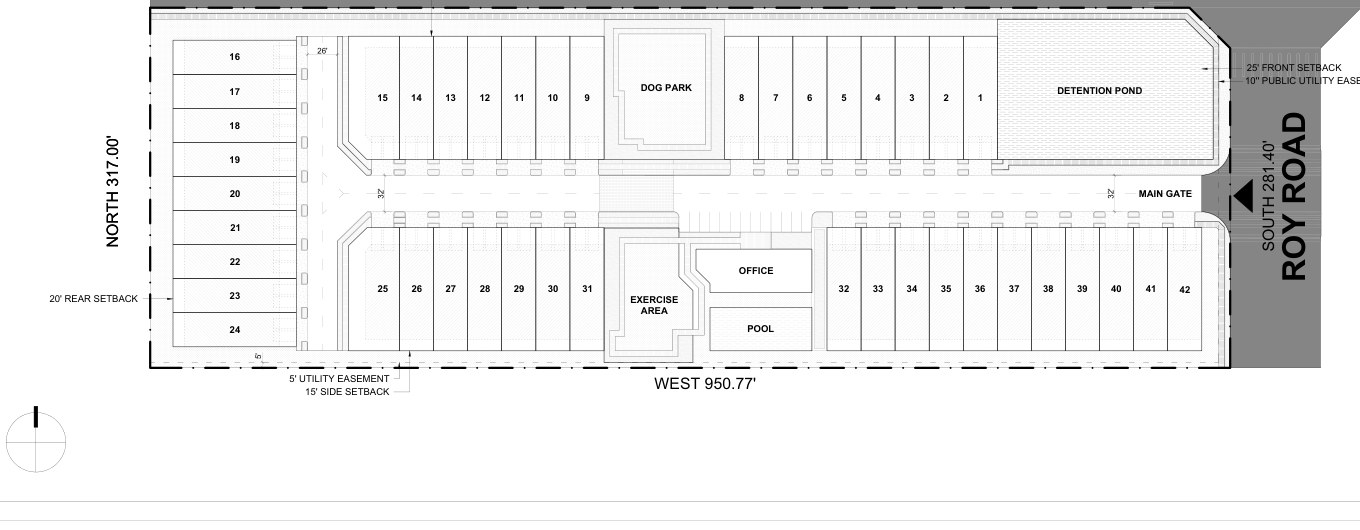
Before: six apartment buildings, 70,800 SF, 145 spaces. Not permitted under SR-12.
After: 42 townhome lots, gated entry, dog park, pool. TH rezoning the city's plans support.
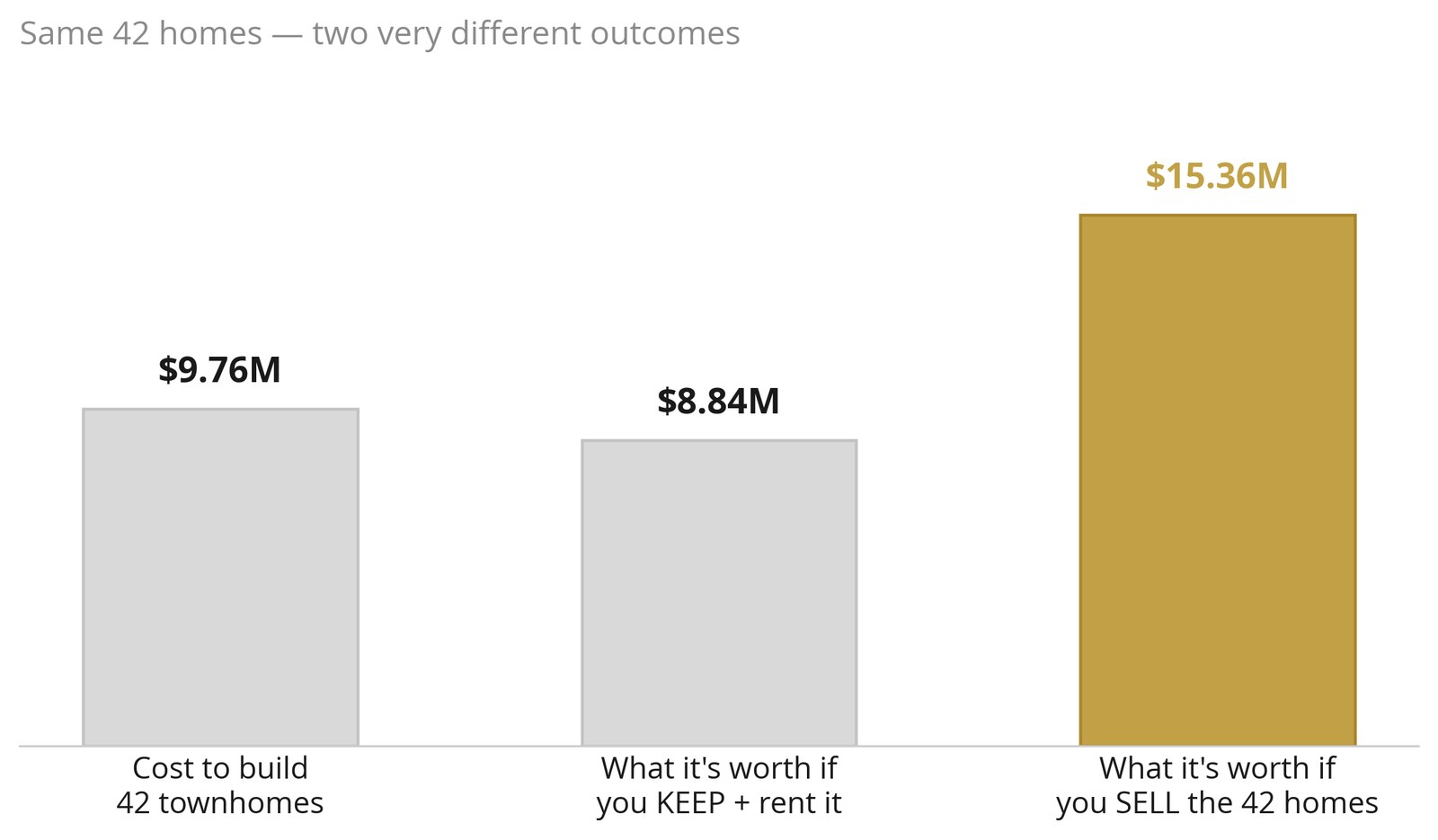
Same 42 homes, two outcomes: $9.76M to build, $8.84M if you keep and rent, about $15M if you sell

The situation

  • The owner already had architect's drawings in hand: a six-building, 70,800 SF apartment community with a pool, gazebo, and leasing office. They were ready to spend.
  • The land is zoned SR-12, Suburban Residential. It does not permit multifamily or condominium development. We called the City of Pearland; Community Development confirmed it does not support new multifamily inside city limits.
  • Every dollar spent pushing the apartment design forward was a dollar spent on a project that cannot get permitted. Nobody had checked. The drawings looked professional, so the plan felt real.

What we did, in 30 days

  • MarketScreened four possible uses, retail, multifamily, self-storage, and low-density residential, against real demand. Pearland homes were selling in 27 to 50 days around $376,000 to $389,000.
  • SiteSat down with the city, confirmed the multifamily dead end, and re-engineered the 6.9 acres as 42 townhome lots under a Townhouse District rezoning the city's own plans support.
  • FinancialCosted the new plan line by line, then tested it two ways: keep it and rent it, or build it and sell it. Those answers were not the same.

The numbers

  • Total cost to build 42 townhomes: $9,757,155 ($232,313 per home, land contributed at $0). Construction loan at 80%: $7.8M; owner's cash needed: $1.95M.
  • If you keep and rent them: $773,479 net income at an 8.75% cap rate is $8.84M. You'd be worth less than you spent.
  • If you sell all 42: 42 homes at $376K to $389K less 6% selling costs is roughly $14.8M to $15.4M (AIRE's illustration from the report's own comparable band).
What could break it. The rezoning is the real risk, not the budget. If Pearland says no to TH zoning, the site falls back to SR-12 single-family and the whole model resets. That's why the LDA documents the city conversation instead of assuming the answer.

The most valuable thing we told this client was no. No, that apartment plan can't be built. Here's the one that can, and here's why selling beats renting on this site.

Tre Marshall · Co-Founder, AIRE Development Group
$9.76MCost of the buildable plan
$8.84MValue if you rent it
~$15MValue if you sell it

Source: Land Development Analysis; engineer's site plans March 2025. For-sale range is AIRE's illustration, not a printed report figure. Client identity withheld.

Case study 03 · Maximum-density multifamily

Same dirt. Same budget. 56 units to 130.

North Houston, Texas · Harris County · 5.70 acres · Reverse-engineered from the balance sheet
+132%Increase in yearly income
130Units the site truly supports
$19.6MValue once stabilized
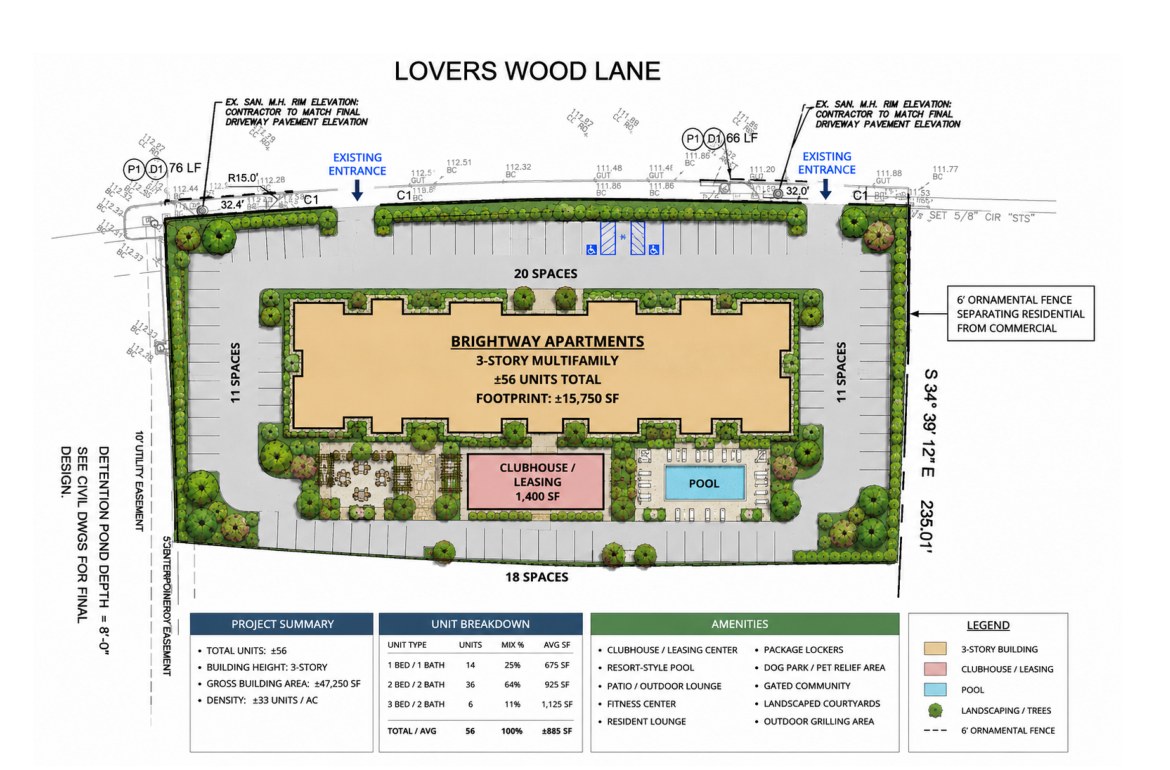
The plan as drawn: one three-story building, 56 units. Correctly designed, simply too small for the land.
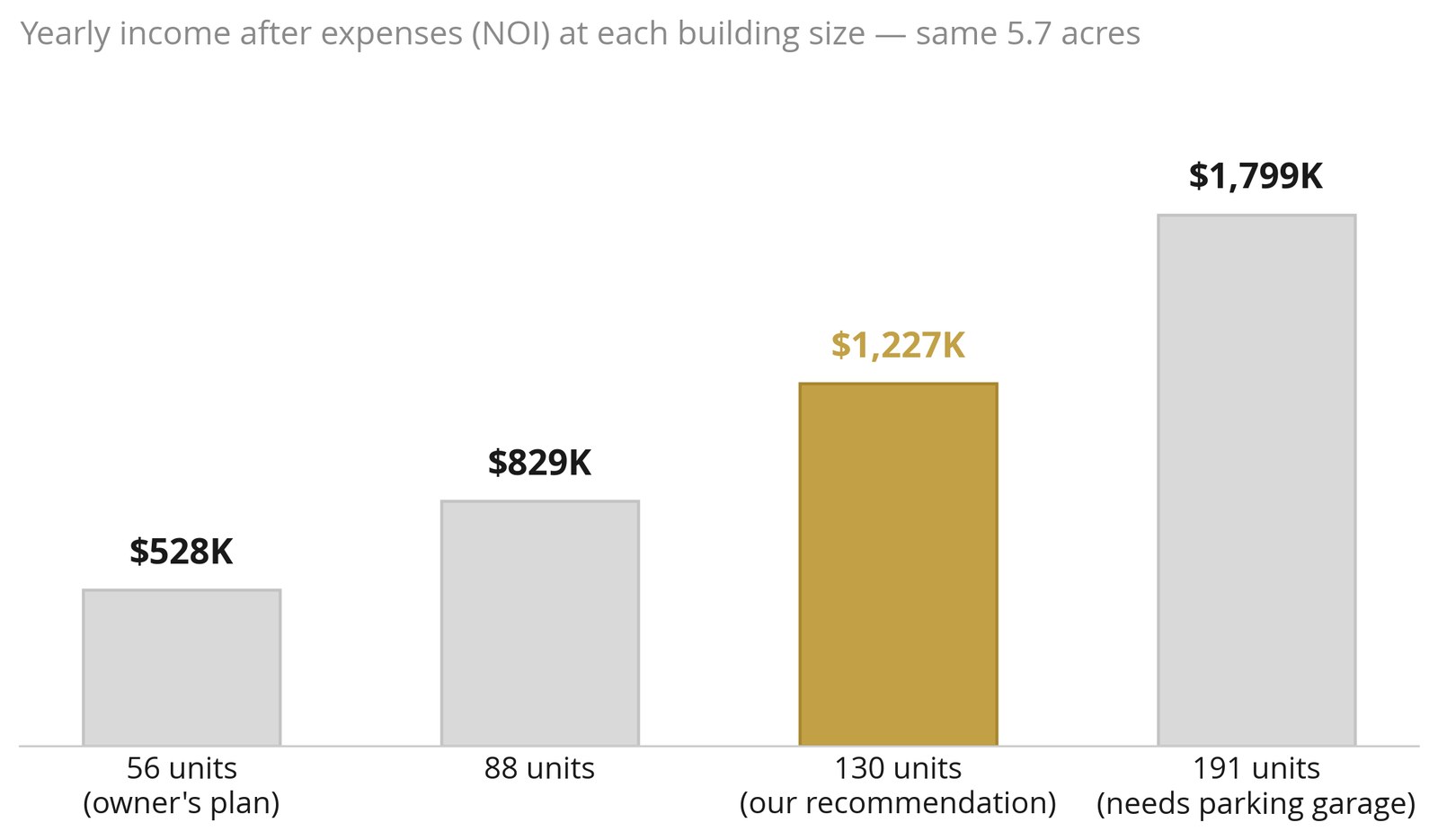
The density ladder: yearly income after expenses at 56, 88, 130, and 191 units on the same 5.7 acres

The situation

  • The sponsor owned 5.7 acres free and clear, appraised at $1.2M as-is with detention already engineered and in the ground, and had a design team and a plan for a 56-unit apartment building. They wanted a construction loan.
  • 56 units on 4.95 usable acres is 11 units per acre, roughly half of what a three-story walk-up normally carries. The plan under-used the land.
  • $1.6M of equity does not fund a Houston apartment building at today's construction pricing, no matter how the deal is sliced. Nobody had asked how many units the site physically holds, or what this sponsor can actually fund.

What we did, in 30 days

  • MarketPriced achievable rents in the submarket at about $1.47 per square foot ($1,302 a month average) and checked the demographics: three-mile median household income of $61,348.
  • SiteUnincorporated Harris County, no zoning density cap, so we let physics set the limit: the fixed detention pond, build lines, easements, parking, and fire access. That works out to about 130 units.
  • Financialmodeled 56, 88, 130, and 191 units, then tested each against what a lender would actually fund, and found the honest answer the sponsor needed to hear.

The numbers

  • At 130 units: $2,030,760 of rent plus $96,070 of other income, less 7% vacancy and $750,750 of operating expenses, is $1,227,202 of net operating income, versus $527,982 at 56 units. Up 132% on the same dirt.
  • At a 6.25% cap rate that is a $19.6M stabilized value (range $18.2M to $21.3M). Permanent loan at 70% of value, 5.50%, 1.31x debt coverage.
  • Feasibility grade B+: fundable through tax-credit equity, not conventional debt.
What could break it. Here is what most consultants won't put in writing: at market construction pricing, a conventionally financed market-rate building on this site does not clear its cost of capital at any unit count. The path that works is a 4% Low-Income Housing Tax Credit deal paired with tax-exempt bonds, which fully funds 130 units with roughly $2.7M of headroom and leaves the sponsor's $600,000 of cash untouched.

A yes that loses money is worth less than a no that saves it. This site is fundable, just not the way the sponsor assumed. That distinction was worth more than the fee.

Tre Marshall · Co-Founder, AIRE Development Group
$528KYearly income at 56 units
$1.23MYearly income at 130 units
$19.6MValue once stabilized

Source: Land Development Analysis v6, rent roll, expenses, cap-rate sensitivity, and density ladder. Client identity withheld.

Case study 04 · Small-scale infill, buy-and-hold

Three weedy lots. $52K on the tax roll. A $976K portfolio.

Elberton, Georgia · Elbert County · 2.59 acres · 3 duplexes, 6 units
$52KAssessed value of the lots
6Rental units they support
$281KEquity built over 10 years
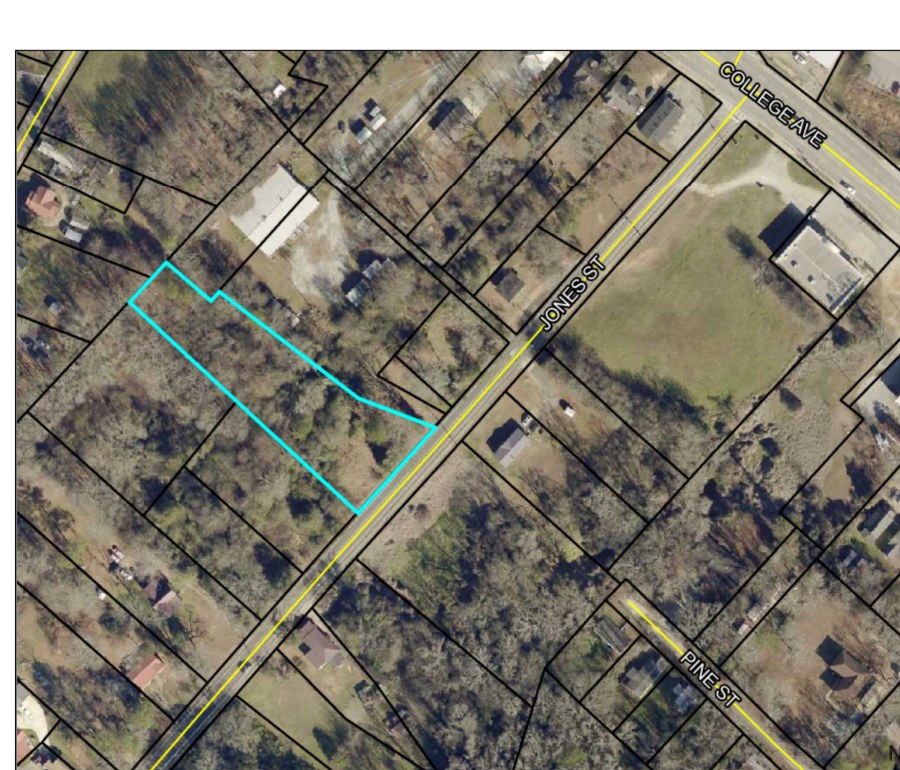
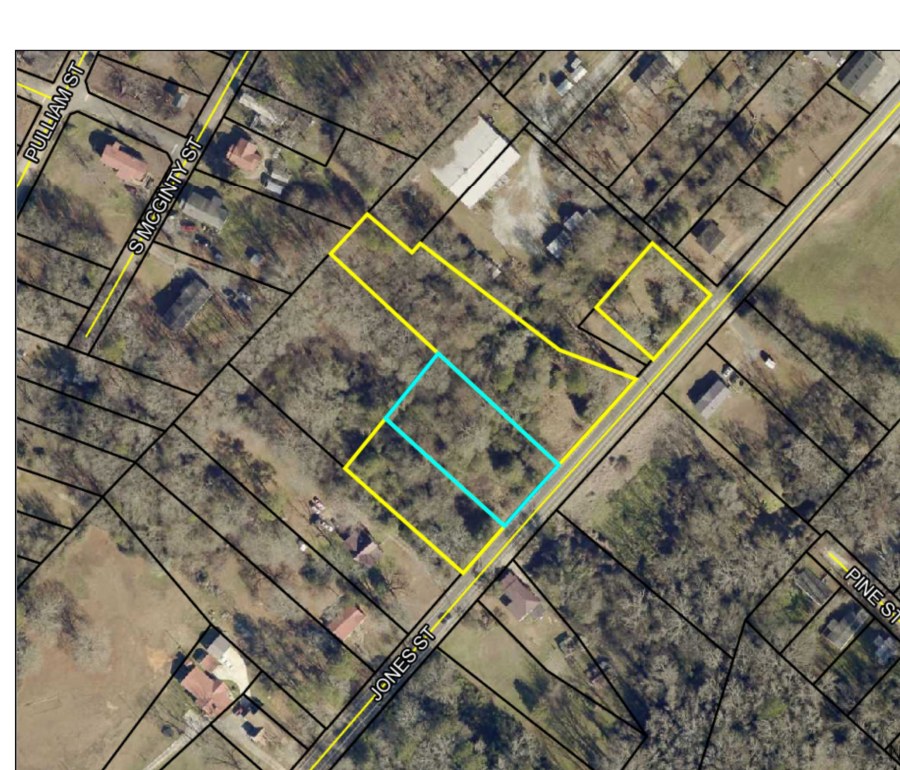
1.55 acres: one duplex plus 1.4 acres held for later phases
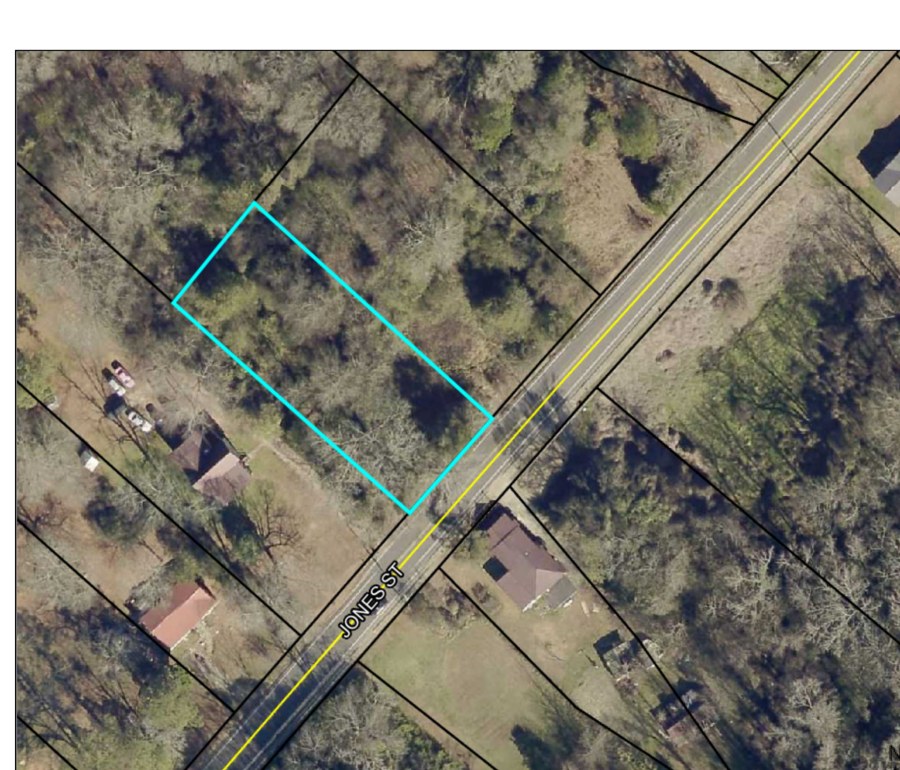
0.59 acres: one duplex, three parking spaces
0.45 acres: one duplex, still double the R-2 minimum lot
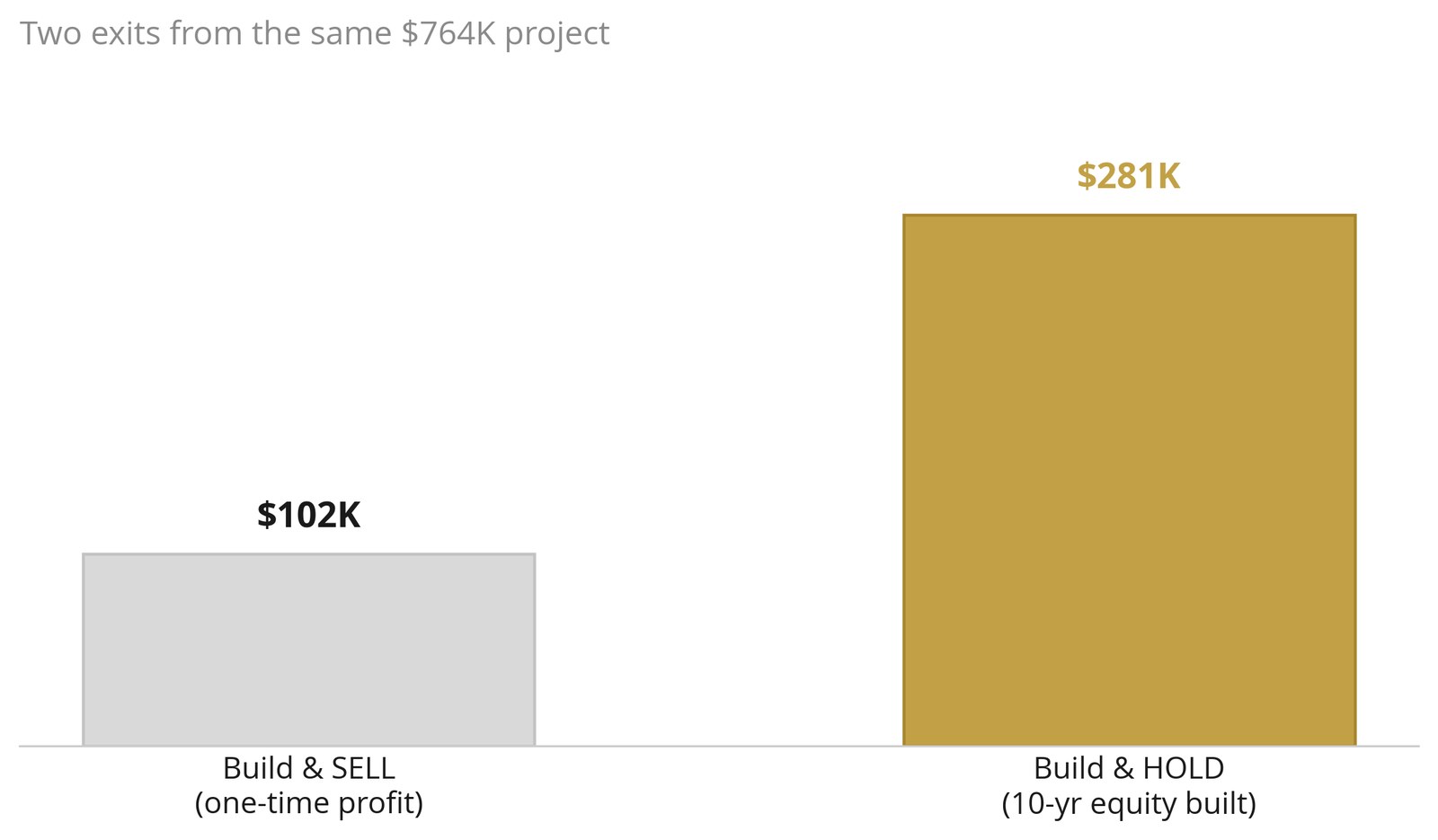
Two exits from the same $764K project: $102K if you build and sell, $281K of equity if you build and hold

The situation

  • A small out-of-state investor owned three overgrown lots on one street in rural Georgia, bought years earlier for a few thousand dollars each, free and clear. The question was simple: build, or sell?
  • Too small for a big consulting firm. A national firm won't take a six-unit project, so nobody would give this investor a real answer.
  • Rentals in town were full: the nearest comparable apartment property was running at 0% vacancy, but nobody had turned that into a number. The real question wasn't 'can it be built' but 'can this investor carry it while it's being built and leased.'

What we did, in 30 days

  • MarketChecked rental comps and the local multifamily market, then set rents at a conservative $700 a month for 900 SF two-bed units in new construction.
  • SiteConfirmed R-2 zoning allows duplexes by right, verified every parcel exceeds minimum lot size, and laid out one duplex per parcel with 1.4 acres held back for future phases.
  • Financialmodeled both exits over ten years, sell at completion or hold and rent, and underwrote it the way a lender would, including the investor's personal income. Screened government programs: USDA Section 538 could cut the monthly carry by 38%.

The numbers

  • Total cost to build three duplexes: $764,400 ($127,400 per unit, land contributed at $0).
  • Sell at completion: $780,000 gross, $101,600 profit after selling costs and loan payoff.
  • Hold: $29,280 of year-one net income, $281,000 of equity built by year 10, a 225% gross return on $125K of equity. Projected property value in year 10: $976K.
What could break it. This project does not cash-flow on its own in year one. It covers only 0.56x of its own debt payment, so the investor writes a $1,920 check every month at the start. It works because their personal income covers it (1.38x global debt coverage) and because that check shrinks 48% by year 10. A USDA Section 538 guarantee would cut year-one carry to about $1,190 a month. We put that on page one, not in a footnote.

Everyone will sell you the upside. Our job is to tell you what it costs to get there, including the months you're writing checks instead of cashing them.

Tre Marshall · Co-Founder, AIRE Development Group
$130KImplied value of the raw land today
$976KProjected value in year 10
$103KNet wealth created after every cost

Source: Land Development Analysis prepared July 2026, pro forma v5 and 10-year hold projection. Client identity withheld.

Your land has a number

Let's go find it.

Every case above started the same way: an owner with land and no clear path forward. Thirty days later they had a plan, a budget, and a number a lender would look at.

Send us the address.

That's it. Parcel number if you have it. Anywhere in the country.

We run the analysis.

Market, site, and financials, all three, in about thirty days.

You get a decision.

Build it, sell it, or walk away, with the math to back it. Big firms charge $50,000-plus for this work and serve institutions. We built AIRE for individual landowners and first-time developers, and if you finance the project through us, the LDA fee rolls into your loan.

Clarity before capital is the highest-return decision you will make on any piece of land.Request an Analysis
Start here

Bring us the parcel.

Whether you own the land, are underwriting a deal, or need capital placed, we start with the same question: what is this site actually worth built out?

Call the office713-300-3744
Start a Conversation Monday to Friday, 9:00 AM to 6:00 PM Central
Call 713-300-3744 Contact Us